
China Best Slatwall Accessories Guide for Global Buyers?
Choosing slatwall accessories from China involves more than comparing prices. Global buyers need products that fit their panels, suit their merchandise, and arrive with specifications they can verify. This Slatwall Accessories Guide introduces the key details to assess, from metal hooks and acrylic bins to shelves, brackets, and display arms. Small differences matter. A hook that looks right in a photo may not fit a panel groove or support the intended product.
A reliable supplier should provide clear dimensions, material descriptions, finish options, and load-capacity information where relevant. Ask for product photos, packaging details, and samples when possible. Check whether accessories are compatible with your slatwall profile, especially when sourcing from multiple manufacturers. A brushed-metal finish, for example, can look different under store lighting, while a poorly protected carton may arrive with scratches or bent hooks. These checks reflect practical buying experience, but they do not replace your own product testing. Specifications can vary between suppliers, and even a detailed catalog may leave questions unanswered. That deserves a closer look. This guide will help buyers compare options more carefully, prepare useful questions, and make informed decisions for retail displays, showrooms, and other merchandising spaces. The best choice is not always the cheapest or most polished one; it is the option that fits your needs consistently.
What Slatwall Accessories Are and How They Work
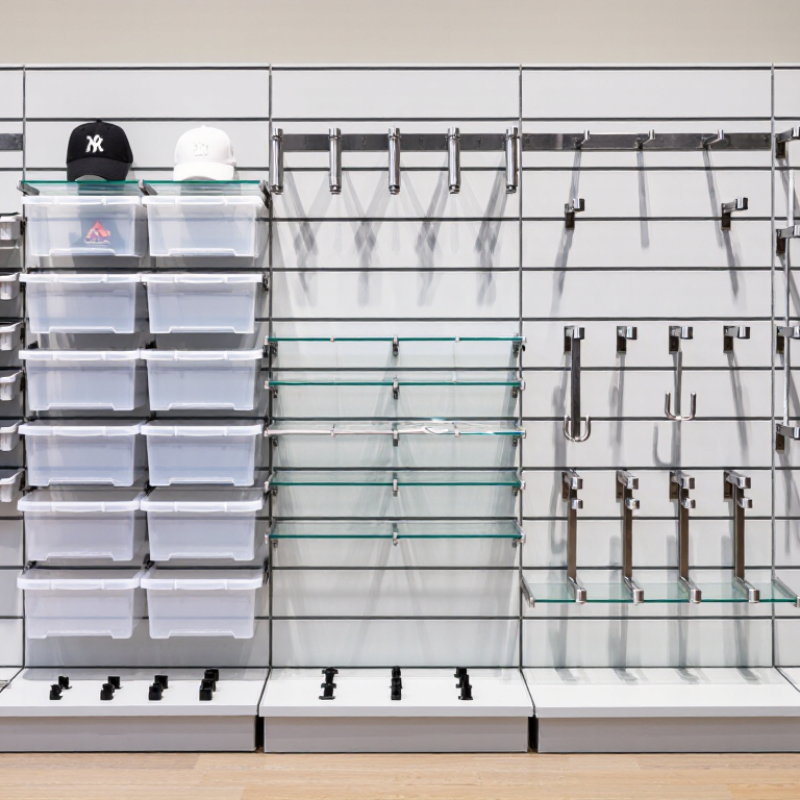
Slatwall accessories are fittings designed to work with grooved display panels. Common options include hooks, shelves, baskets, and brackets. Each fitting has a shaped back that slides into a panel groove and rests against its face. This lets retailers rearrange displays without drilling new holes for every product. A short hook may hold packaged items, while a shelf can support folded clothing or small boxes. The panel and fitting must be compatible, and their rated capacity matters. A display that looks sturdy is not automatically safe under heavy loads.
Tips: Check groove spacing and accessory fit before ordering. Test one loaded fitting first. Keep heavier items lower, and spread weight across several slots rather than concentrating it in one area.
How accessories work depends on both the fitting and the wall installation. The panel transfers the load to its fixings and supporting structure, so secure mounting is essential. Follow the panel maker’s installation guidance and the accessory’s load rating; ratings can vary by product and setup. In practice, uneven walls or poorly seated hooks can cause wobble. I would not assume every accessory fits every slatwall—measure the groove, inspect the backing, and test the actual combination. A little checking prevents a display from shifting during daily use.
| Accessory Type | What It Is | How It Works with a Slatwall | Common Materials | Typical Applications | Buyer Checks |
|---|---|---|---|---|---|
| Slatwall Hook | A projecting peg or hook used to hang products, packs, or display cards. | A rear mounting tab or plate engages a horizontal panel groove; the hook projects outward to support hanging items. | Steel wire, formed steel, or molded plastic. | Packaged goods, tools, accessories, and lightweight merchandise. | Confirm groove and insert dimensions, hook length, wire diameter, finish, and intended load. Capacity depends on the panel and installation. |
| Slatwall Shelf | A flat display surface that creates a shelf at a selected height. | Usually rests on one or more slatwall brackets. The brackets engage the grooves and support the shelf from below. | Metal, wood, acrylic, or plastic. | Boxed products, folded goods, display samples, and small equipment. | Check shelf dimensions, bracket spacing, panel compatibility, edge design, and the combined capacity of the shelf, brackets, and wall system. |
| Slatwall Bracket | A support arm or pair of arms designed to hold shelves and other attachments. | The mounting end fits into a panel groove; the projecting arm carries a shelf or compatible display component. | Steel or aluminum, sometimes with a coated finish. | Shelves, work surfaces, and supported merchandising fixtures. | Verify bracket profile, projection, material thickness, number of supports required, and compatibility with the specific panel groove. |
| Faceout | A straight or angled arm that presents hanging products facing the shopper. | Its mounting plate engages a groove, while the forward arm holds hangers or merchandise for front-facing display. | Steel rod, steel tube, or formed metal. | Apparel, bags, accessories, and products displayed on hangers. | Check arm length, end-stop style, mounting geometry, and the type and quantity of items to be displayed. |
| Waterfall Arm | An angled display arm with a series of notches or stops for hangers. | Attaches to a panel groove and arranges garments or products in a stepped line, helping shoppers view individual items. | Steel rod or tube, commonly with a protective coating. | Clothing, packaged accessories, and other hanger-mounted products. | Review arm angle, length, number of notches, hanger fit, finish, and the load limits of the complete installation. |
| Display Basket | A wire or molded container that holds loose or small packaged products. | Integrated tabs or brackets engage the panel grooves, suspending the basket from the wall. | Coated steel wire, stainless steel, or plastic. | Small goods, clearance items, supplies, and products that are difficult to hang individually. | Check basket width, depth, mesh openings, attachment style, and whether the contents are suitable for the basket's intended capacity. |
| Storage Bin | An open-front container for organizing small products or components. | A rear lip, bracket, or mounting plate connects the bin to a compatible panel groove for quick access and repositioning. | Plastic, metal, or wire. | Parts, fasteners, craft supplies, hardware, and small retail items. | Check bin dimensions, opening size, mounting method, material, and whether labels or dividers are needed. |
| Sign Holder | A clip, frame, or pocket used to display product information or pricing. | Mounts in a groove or attaches to another slatwall accessory, positioning a sign near the displayed merchandise. | Clear acrylic, PVC, PET, metal, or plastic. | Price cards, product details, promotional messages, and aisle information. | Confirm sign size, orientation, viewing angle, attachment method, and suitability for the display environment. |
| Brochure Holder | A pocket or rack that keeps printed material accessible to visitors. | Hooks or mounting tabs engage the grooves, holding brochures vertically or at an angle. | Acrylic, plastic, or coated metal. | Catalogs, leaflets, instruction sheets, and product literature. | Match the holder to the printed material's dimensions and check pocket depth, orientation, and groove fit. |
| Mirror or Small Display Panel | A mounted surface used for customer convenience or visual merchandising. | Special brackets or a compatible frame attach to the panel grooves to hold the mirror or display surface in position. | Glass with a frame, acrylic mirror, or framed display board. | Fitting areas, accessory displays, and retail presentation zones. | Check mounting hardware, dimensions, edge protection, stability, and whether the panel is suitable for the item's weight. |
Compatibility and load capacity are not universal. Slatwall groove dimensions, panel construction, accessory mounting tabs, bracket spacing, and installation conditions can vary. Confirm measurements and the complete system's rated limits before ordering or loading accessories.
Related Posts
-
What Is the Best Epoxy Garage Flooring?
-
China Best Entryway Storage Systems Manufacturers?
-
How to Choose the Best Adjustable Shelving Systems for Your Needs?
-
How to Choose the Best Closet Lighting Ideas?
-

Top 10 Tips for Decluttering Your Home Efficiently?
-
Top 10 Kitchen Pantry Shelving Ideas to Maximize Space