How to Choose the Best Closet Lighting Ideas?

Choosing the right closet lighting can change how quickly you find clothes, match colors, and maintain an organized space. The best Closet Lighting Ideas balance brightness, comfort, energy use, and the closet’s actual shape. A narrow wardrobe needs a different solution from a walk-in closet with deep shelves and dark corners.

I have learned that brightness alone does not solve every lighting problem. A strong ceiling fixture may illuminate the floor while leaving hanging clothes in shadow. LED strips under shelves can provide more useful, even light. They also produce less heat and usually consume less energy than older bulbs. Look for a color temperature between 3000K and 4000K for a clear but comfortable appearance. A high color rendering index, preferably 80 or above, helps clothing colors look more natural.

Small details matter.

Motion sensors are practical when your hands are full. Dimmers can reduce glare during early mornings. Battery-powered lights offer simple installation, but batteries may need frequent replacement in busy closets. Hardwired fixtures can look cleaner, yet a qualified electrician should handle electrical connections. Local building requirements may also affect fixture placement and wiring.

I once focused too much on appearance and overlooked the shadows created by shelving. That mistake changed how I evaluate closet lighting. Measure the space, note where shadows fall, and consider how the closet is used daily. The most attractive fixture is not always the most reliable choice. A thoughtful plan combines safe installation, efficient LEDs, suitable brightness, and lighting that makes everyday routines easier.
How to Choose the Best Closet Lighting Ideas?

Define Your Closet Lighting Needs and Available Space

Your closet lighting plan should begin with a clear question: what do you need to see? If you select clothes before sunrise, bright, even light matters. If you only store coats, softer illumination may be enough. Walk through the space at different times of day. Notice dark corners, crowded shelves, and areas blocked by hanging garments. I once focused on the ceiling and missed the shadow beneath a deep shelf.

Measure the closet before choosing fixtures. Record its length, width, height, shelf depth, and door position. A narrow wardrobe may need slim, vertical lighting instead of one central fixture. Larger walk-in closets often benefit from layered light, including ceiling, shelf, and hanging-rail illumination. Keep switches near the entrance. Motion sensors can help when your hands are full, but they may turn off while you are standing still.

Choose a neutral color temperature so clothing colors look natural. Very cool light can make fabrics appear harsh, while warm light may distort navy, gray, or black garments. Check brightness carefully. More light is not always better. Glare on mirrors and polished doors quickly becomes tiring. Use enclosed, suitable fixtures and keep electrical installations away from moisture. Local building codes still matter, even in a small closet. Test the lighting at night before final installation; the first arrangement may look practical, yet reveal shadows after the door closes.

Compare Closet Lighting Types and Their Uses

How to Choose the Best Closet Lighting Ideas?

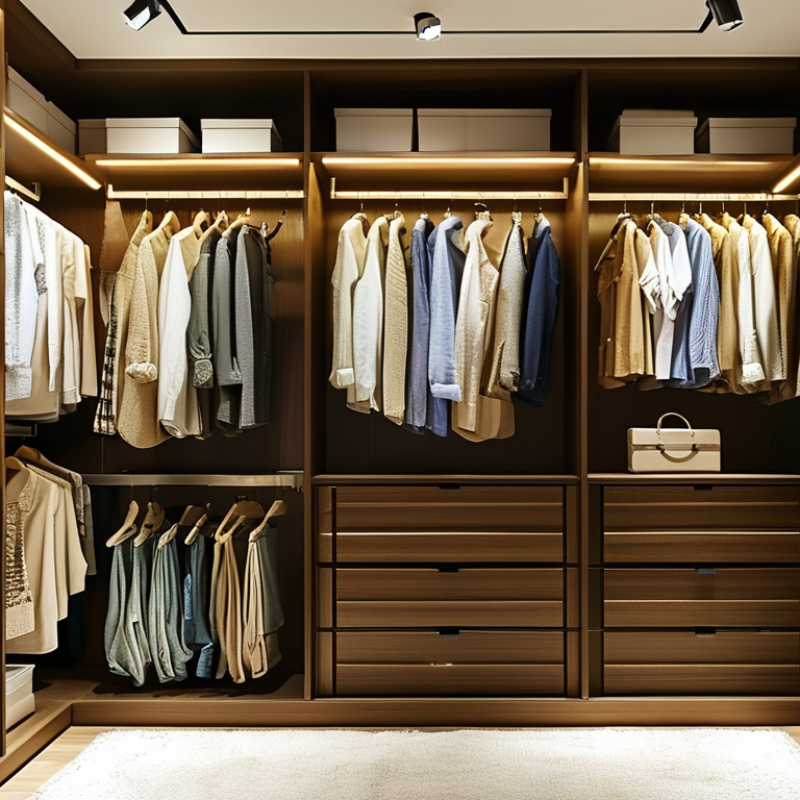
Closet lighting should match the space, clothing, and daily routine. LED strips work well under shelves because they spread light across folded clothes. Puck lights create focused pools of light for drawers or small compartments. Ceiling fixtures brighten the entire closet, but they may leave shadows beneath shelves. Motion-sensor lights are convenient when your hands are full. They also reduce wasted energy.

Color temperature affects how clothing appears. Neutral white light, around 3500K to 4000K, usually offers a balanced look. High color-rendering light helps reveal true fabric colors. A narrow closet may need layered lighting rather than one powerful fixture. I once chose a very bright ceiling light, but the lower shelves still looked dim. More brightness was not the real solution. Position mattered more.

Tips: Measure each lighting zone before buying fixtures. Keep strips near the front edge of shelves for better coverage. Use diffusers when bare LEDs create harsh spots. Check heat, wiring, and installation instructions carefully. Battery lights suit renters, though batteries can become annoying over time. Test the light at night before final installation. A small adjustment can change everything.

Choose the Right Brightness, Color Temperature, and Beam Angle

Brightness should match the closet’s tasks, not its size. Aim for about 200–300 lux on shelves and hanging areas. This range offers useful visibility without making white shirts look harsh. The Illuminating Engineering Society recommends judging lighting by illuminance, uniformity, glare, and visual comfort, not lumens alone. Measure the darkest shelf, because the brightest spot can hide poor coverage.

Color temperature changes how clothing appears. A warm 2700K setting feels comfortable, but beige and brown fabrics may look too yellow. A neutral 3500K–4000K setting usually reveals colors more naturally. The CIE 015:2018 report also warns that color rendering metrics have limits. Therefore, choose a high color-rendering source, preferably with an Rf value near 90 or above when available. I once selected a cooler light for a dark wardrobe. It looked clean at night, yet navy clothing appeared almost black. That choice needed reconsideration.

Beam angle controls shadows and glare. Narrow beams around 24–36 degrees can highlight shelves, but they may create bright circles and dark gaps. Wider beams, near 60 degrees, spread light more evenly in shallow closets. The U.S. Department of Energy’s 2022 Solid-State Lighting R&D Opportunities report notes that LED efficacy can exceed 200 lumens per watt in laboratory conditions. Efficiency is valuable, but laboratory performance does not guarantee comfort at home. Test one fixture at eye level, then inspect the lowest shelf. Too much brightness is still a design mistake.

How to Choose the Best Closet Lighting Ideas? - Choose the Right Brightness, Color Temperature, and Beam Angle

Closet Area or Task Recommended Illuminance Approximate Lumens Recommended Color Temperature Recommended Beam Angle Recommended CRI Practical Lighting Advice
Small reach-in closet
Up to approximately 2 m²
100–200 lux on shelves and the floor 800–1,500 lm total, depending on ceiling height and surface reflectance 3000–3500 K for a comfortable, neutral appearance 90°–120° for broad, even coverage CRI 80 minimum; CRI 90 preferred for clothing colors Use one centered ceiling fixture or a compact flush-mount light. Add a door-activated sensor where convenient.
Medium walk-in closet
Approximately 2–6 m²
150–300 lux throughout the walking area 1,500–3,000 lm total 3000–4000 K 60°–90° for ceiling downlights; 100°–120° for linear fixtures CRI 90 or higher for accurate garment and accessory colors Distribute several fixtures instead of relying on one bright center light to reduce shadows beside shelves.
Large walk-in closet
More than approximately 6 m²
200–300 lux for general circulation and storage 3,000–6,000 lm total, adjusted for ceiling height and finishes 3000–4000 K 36°–60° for accenting shelves; 90°–120° for general illumination CRI 90 or higher Combine ambient ceiling lighting with shelf, cabinet, or wardrobe lighting. Use multiple circuits for better control.
Wardrobe and hanging-rail lighting 150–250 lux on the front of garments Approximately 300–800 lm per linear metre of illuminated rail or cabinet 3000–3500 K to keep fabrics looking natural and warm 100°–140° for continuous, low-shadow illumination CRI 90 or higher Install linear lights near the front edge of shelves or rails. Shield the light source to prevent glare when doors are open.
Shoe shelves and accessories 200–300 lux on shelf surfaces Approximately 150–400 lm per shelf section 3000–4000 K 24°–40° for focused shelf accents CRI 90 or higher Use narrow or adjustable beams to highlight individual shelves without spilling excessive light into the room.
Mirror and outfit-checking area 300–500 lux on the face and clothing 1,000–2,000 lm around or beside a full-length mirror 3500–4000 K for balanced color perception 90°–120° for soft, even facial illumination CRI 90–95 preferred Place vertical lights on both sides of the mirror or use a diffused fixture above and beside it. Avoid a single overhead light that creates eye-socket shadows.
Dark closet with deep shelving 200–300 lux at the back of shelves Use multiple low-glare fixtures totaling approximately 2,000–4,000 lm 3500–4000 K 100°–120° for shelf coverage; avoid excessively narrow beams CRI 90 or higher Position fixtures toward the front of each shelf or use vertical side lighting to prevent the front edge of shelves from blocking the light.
General residential closet 100–200 lux for basic visibility and organization Approximately 800–2,000 lm total 2700–3000 K for a warmer, more relaxed atmosphere 90°–120° CRI 80 minimum Choose a dimmable fixture if the closet also functions as a dressing or preparation area.

Planning note: Illuminance values are practical design ranges measured at the working surface. Actual lumen requirements vary with closet size, ceiling height, fixture efficiency, wall color, shelf depth, and the amount of daylight. Select products with low glare, use diffusers where possible, and follow local electrical and safety requirements.

Plan Fixture Placement, Power Sources, and Installation

How to Choose the Best Closet Lighting Ideas?

Good closet lighting begins with fixture placement, not appearance. I measure the shelves, hanging areas, doors, and walking path before selecting any fixture. Ceiling lights can brighten the center, but they often leave dark corners. Recessed fixtures work well in larger closets when spaced evenly. Slim vertical lights suit narrow wardrobes and illuminate clothing from both sides. Keep the fixture clear of swinging doors. Measure twice.

Power planning affects both safety and convenience. A nearby switched circuit may support a hardwired ceiling fixture, while a low-voltage system can suit shelving or cabinets. Battery lights are useful for rented spaces, but frequent replacement becomes frustrating. I prefer an accessible switch near the entrance, sometimes with a second switch inside a walk-in closet. Motion sensors add comfort, though they may activate when someone only reaches past the doorway. Keep it simple.

Installation needs careful attention to heat, wiring, and local electrical requirements. Use fixtures rated for enclosed spaces when airflow is limited. An electrician should inspect new wiring, junction boxes, and circuit capacity. I once placed a light too close to a high shelf, creating glare on white doors. It looked acceptable at night, but daylight exposed the mistake. A small adjustable fixture would have worked better. Leave enough clearance for clothes, verify connections, and test every switch before loading the closet.

Evaluate Safety, Energy Efficiency, and Long-Term Maintenance

How to Choose the Best Closet Lighting Ideas?

Evaluate Safety, Energy Efficiency, and Long-Term Maintenance

Closet lighting should illuminate every shelf without heating nearby clothing. Choose enclosed fixtures with low surface temperatures, especially in compact wardrobes. Keep lights away from hanging fabric, stored boxes, and moving doors. A qualified electrician can confirm proper wiring, grounding, and local clearance requirements. Do not rely on appearance alone.

LED lighting usually uses less electricity and lasts longer than older bulb types. Select a warm or neutral color temperature for comfortable clothing choices. Motion sensors can prevent lights from staying on accidentally. However, sensors may activate when a door moves nearby. Test the detection range before permanent installation. A small closet rarely needs excessive brightness.

Maintenance deserves attention before installation. Dust gathers on lenses and reduces useful light. Wipe fixtures with a dry, soft cloth every few months. Check cables, switches, and sensor covers for looseness or damage. Battery-powered units may seem convenient, but battery replacement can become irritating. I once chose a sensor light with excellent brightness but poor placement; it switched off while I was reaching behind a shelf. That mistake showed me that convenience needs testing. Keep access to the switch and wiring clear, even when the closet is full. A simple lighting plan is easier to inspect, repair, and adapt later.