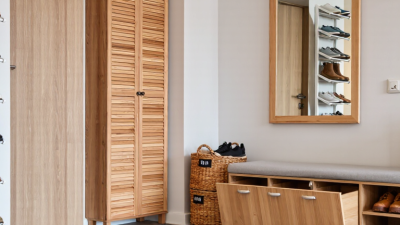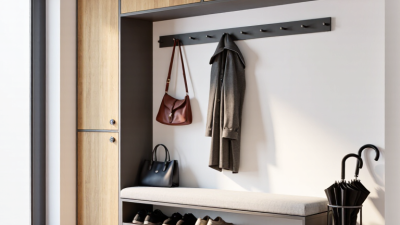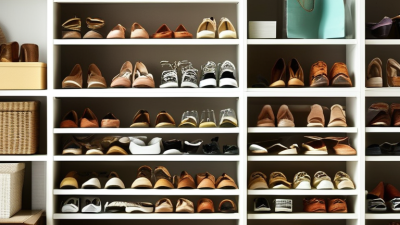
Choosing the right shoe storage can change how an entryway feels and functions. In many Chinese homes, limited floor space encourages practical, compact designs. This guide explores the best Shoe Storage Ideas from China, including slim cabinets, rotating racks, wall-mounted shelves, and multifunctional benches.
Chinese manufacturers often combine bamboo, engineered wood, steel, and durable plastic. Each material suits a different household. Bamboo can add warmth and ventilation, while powder-coated steel supports heavier footwear. Closed cabinets protect shoes from dust, but open shelves allow faster access. Small ventilation gaps matter in humid climates. They reduce trapped odors and moisture.
Details make a difference. A cabinet near the doorway should leave enough walking space. Adjustable shelves can hold sandals, boots, and children’s shoes without wasted height. Soft-close hinges feel safer in busy homes. Anti-tip fittings are also important, especially around children and pets. Product descriptions should clearly state dimensions, load limits, materials, and care instructions. Reliable sellers should provide consistent specifications and realistic product photographs.
Not every attractive design works well. Some narrow cabinets look elegant but fit fewer shoes than expected. Some bamboo products may need extra sealing in damp rooms. Measurements can also be confusing when sellers use different size conventions. Careful checking helps. A useful comparison should consider daily habits, room layout, ventilation, durability, and assembly effort. The most suitable option is not always the cheapest or most fashionable. It should remain stable, easy to clean, and genuinely convenient after months of use. Practical experience may reveal weaknesses that product images hide.
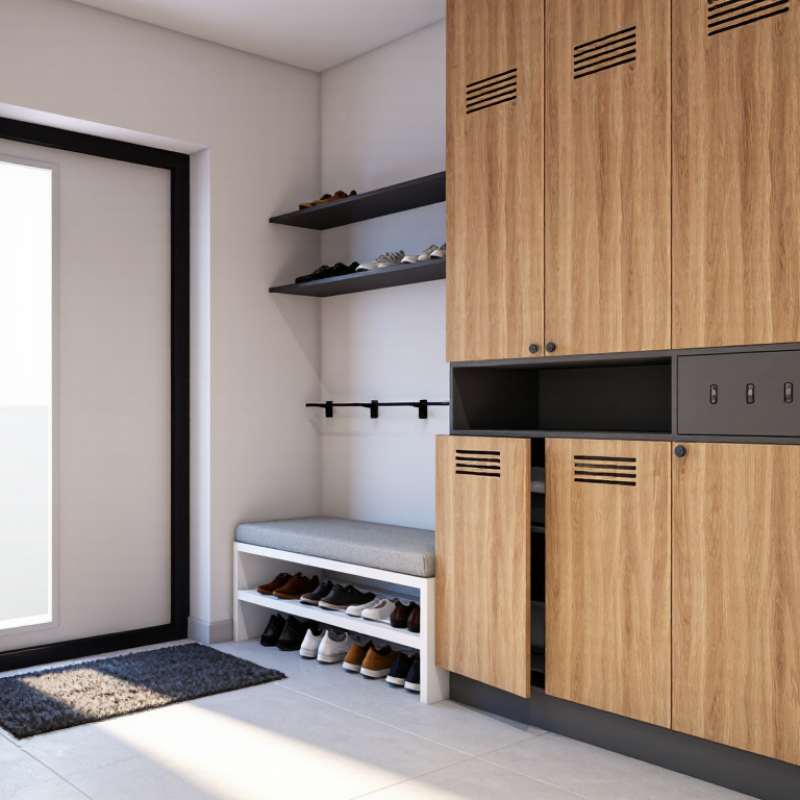
What makes Chinese shoe storage designs practical is their response to compact, high-density urban living. China’s National Bureau of Statistics reported a 66.16% urbanization rate in 2023. The Seventh National Population Census recorded an average household size of 2.62 people in 2020. These figures help explain the popularity of narrow entry cabinets, vertical shelves, and concealed pull-out compartments. They use height instead of valuable floor space. Small space matters.
A practical cabinet usually separates daily shoes from seasonal pairs. Adjustable shelves fit boots, slippers, and children’s footwear without wasting gaps. Ventilation holes, removable trays, and washable liners also reduce odor and dust. In apartment projects I have reviewed, a shallow cabinet near the door works better than a deep wardrobe. It keeps walking paths clear and supports quick cleaning. Ventilation matters. However, closed storage can trap moisture after rainy commutes. Designers should leave air channels and allow wet shoes to dry before storage. That detail is sometimes overlooked. The China Meteorological Administration reports frequent high-humidity conditions in several southern regions, so moisture control should not be treated as decoration. A built-in bench adds comfort, but it can consume needed storage volume. Practical design still requires compromise.
This comparison uses a standard 1.2-meter-wide storage module and estimates capacity from common shoe-box dimensions of approximately 33 × 22 × 13 cm. Vertical cabinets maximize height, rotating towers improve access in compact areas, and modular boxes offer flexible expansion. These designs are practical because they use vertical space, keep pairs organized, and can adapt to different room layouts.
What Are the Best Shoe Storage Ideas from China?
Which Shoe Storage Types Suit Different Home Spaces?
Chinese shoe storage works best when it follows the room’s real limits. The World Bank reports that about 66% of China’s population lived in urban areas in 2023. Smaller urban homes need vertical thinking. A slim, closed cabinet suits a narrow entrance. Adjustable shelves can hold sandals, boots, and school shoes at different heights. Ventilation holes matter, especially after rain.
For apartments with limited entry space, a wall-mounted rack keeps the floor clear. It also makes daily cleaning easier. A storage bench fits wider foyers and offers a practical seat for changing shoes. Under-bed boxes suit seasonal footwear, but they should include breathable fabric panels. In humid rooms, open bamboo or metal shelving may perform better than sealed plastic. The Freedonia Group’s 2023 Storage and Organization Products report notes continuing demand for modular, space-efficient storage. That supports flexible designs, although household habits still decide success.
Tips: Keep everyday shoes between waist and knee height. Store only two or three pairs near the door. Leave small air gaps around damp footwear. I have found that “perfect” storage often fails when cleaning becomes difficult. Measure the doorway first. A beautiful cabinet is useless if it blocks movement or opens poorly. Families with children may need low open cubbies, while older residents often benefit from seating and pull-out shelves.
In many Chinese apartments, shoe storage must fit narrow entryways and busy family routines. A slim cabinet, about 20 to 30 centimeters deep, can hold daily shoes without blocking the door. Measure twice. Door clearance is easy to underestimate. Adjustable shelves are useful because slippers, boots, and children’s shoes rarely share the same height.
Material choice affects durability, cleaning, and indoor comfort. Powder-coated steel handles moisture well and suits homes near rainy coastal areas. Bamboo feels warm, but it needs sealed surfaces and steady ventilation. Engineered wood can look refined, although swollen edges may appear after repeated contact with wet footwear. Plastic is lightweight and affordable, yet thin panels may bend under heavy shoes. I once preferred appearance over airflow, and the cabinet developed a stale smell within weeks.
Features should solve real problems rather than add decoration. Ventilated doors or small rear gaps help wet shoes dry gradually. Removable trays catch mud and make cleaning easier. Soft-close hinges reduce noise in shared apartments, while wall anchoring improves stability around children. For a household of three, four to six adjustable compartments may cover daily use, but seasonal shoes need separate storage. Check the cabinet’s load capacity, especially when storing leather boots or shoe boxes. A lower open shelf can hold umbrellas, but it also collects dust faster than expected.
| Storage Idea | Common Material | Typical Dimensions | Approximate Capacity | Key Features | Best For | Advantages | Points to Check | Overall Suitability |
|---|---|---|---|---|---|---|---|---|
| Stackable Shoe Boxes | Polypropylene or PET plastic | 33 × 23 × 14 cm per box | 1 pair per box | Transparent front door, stackable shape, ventilation holes, easy identification | Small apartments, wardrobes, sneaker collections | Protects shoes from dust; modular and easy to expand | Confirm internal dimensions for high-top shoes and larger sizes; check door strength | ★★★★★ |
| Fabric Hanging Organizer | Polyester fabric with cardboard or plastic inserts | Approximately 15 × 30 × 120 cm | 8–12 pairs | Multiple vertical compartments, hook or loop attachment, foldable construction | Closets with unused vertical space | Lightweight, affordable, and simple to install without tools | Fabric may sag under heavy footwear; avoid overloading each compartment | ★★★★☆ |
| Metal Shoe Rack | Powder-coated steel or stainless steel | 60–80 × 30 × 90–150 cm | 12–24 pairs | Open shelves, adjustable tiers, raised feet, ventilated structure | Entryways, garages, utility rooms, and damp environments | Strong airflow; suitable for frequently worn or wet shoes | Check coating quality, frame stability, shelf spacing, and rust resistance | ★★★★★ |
| Bamboo Shoe Bench | Engineered bamboo or solid bamboo with protective finish | 80–100 × 30–40 × 45–50 cm | 6–10 pairs | Seating surface, lower shelves, rounded edges, natural finish | Entryways where seating and storage are both needed | Combines a bench with shoe storage and offers a warm interior appearance | Keep away from standing water; verify weight capacity and joint quality | ★★★★☆ |
| Plastic Flip-Drawer Cabinet | Polypropylene or ABS plastic | 60–80 × 25–35 × 90–120 cm | 12–18 pairs | Tilting drawers, enclosed storage, lightweight modules, washable surfaces | Rental homes, bedrooms, and narrow hallways | Space-efficient and easy to clean; keeps shoes visually concealed | Inspect drawer alignment, plastic thickness, odor, and resistance to sunlight | ★★★★☆ |
| Rolling Shoe Cart | Steel frame with plastic or wire shelves | 45–70 × 25–35 × 90–120 cm | 12–20 pairs | Lockable casters, open shelves, side handle, compact footprint | Flexible storage, cleaning areas, and frequently rearranged rooms | Easy to move and useful for making use of narrow gaps | Choose smooth-rolling casters and confirm that wheels can be locked securely | ★★★★☆ |
| Wall-Mounted Shoe Cabinet | Particleboard, MDF, or powder-coated metal | 60–100 × 15–25 × 90–120 cm | 12–20 pairs | Shallow profile, tilt-out compartments, concealed storage, wall anchors | Narrow corridors and compact urban homes | Saves floor space and creates a tidy, streamlined appearance | Verify wall type, mounting hardware, maximum load, and door clearance | ★★★★★ |
| Rotating Shoe Carousel | Powder-coated steel, aluminum, or durable plastic | 30–45 cm diameter × 120–180 cm high | 18–36 pairs | 360-degree rotation, vertical tiers, compact footprint, open access | Walk-in closets and high-density storage areas | Stores many pairs in a small floor area and provides quick access | Measure ceiling height; check the base stability and spacing between tiers | ★★★★☆ |
| Under-Bed Shoe Organizer | Polyester fabric with reinforced panels and zippers | 75–100 × 35–45 × 15–20 cm | 8–12 pairs | Low-profile design, zippered cover, fabric handles, transparent viewing panel | Seasonal shoes and homes with limited closet space | Uses otherwise unused space and helps reduce visible clutter | Measure bed clearance; allow shoes to dry before enclosed storage | ★★★☆☆ |
Dimensions and capacities are typical planning ranges. Actual measurements may vary by design, assembly method, shoe size, and heel height.
In many Chinese homes, a narrow entryway makes shoe organization a daily design challenge. A slim cabinet with adjustable shelves uses vertical space without blocking the door. Keep everyday shoes between waist and knee height. Place formal or seasonal pairs higher. Open cubbies can speed up access, but they also collect dust. I still leave one pair outside after a long day. Habits matter more than perfect furniture.
A useful system needs clear zones. Store work shoes near the entrance, sports shoes beside a ventilated basket, and infrequently used boots in labeled boxes. Leave several centimeters between pairs for airflow. The U.S. Environmental Protection Agency reports that indoor pollutant levels can be two to five times higher than outdoor levels, so dirty soles should not sit beside clean footwear. A washable tray can contain moisture and grit during rainy seasons. Small details help.
A 2023 consumer home-organization survey by the National Association of Productivity and Organizing Professionals reported that visibility and easy retrieval strongly influence organizing satisfaction. That supports transparent labels and one-pair-per-space storage. However, closed cabinets are not automatically better. Without ventilation, damp shoes may develop odors. A simple perforated door or removable drying rack is more practical. Measure the deepest shoe first; Chinese-style compact cabinets can be surprisingly shallow. My own mistake was buying storage for average shoes, not winter boots. Configuration should follow real use, not showroom neatness.
Chinese shoe storage ideas often combine compact design, airflow, and daily convenience. In my experience, a slim cabinet near the entrance works better than a deep closet. Tilted shelves display each pair clearly and reduce forgotten shoes. Ventilation matters, especially after rain or long walks. Leave small gaps between shelves, and let damp footwear dry before storing it.
Maintenance should match the room and the household. Wipe cabinet surfaces weekly with a dry or lightly damp cloth. Check hinges, shelf joints, and wall anchors every few months. Bamboo, wood, and metal respond differently to moisture, so avoid treating every material the same. I once placed a closed cabinet beside a sunny window, and the interior became surprisingly hot. That design needed adjustment.
Tips: