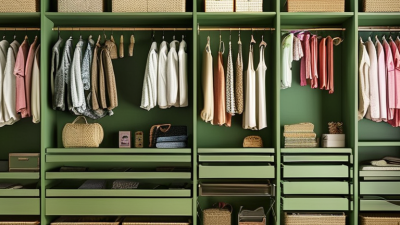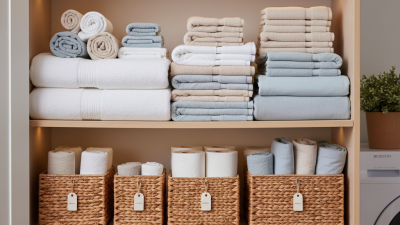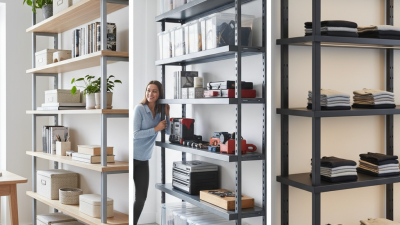
An entryway is small, but it handles a steady stream of daily life: shoes by the door, keys on a narrow shelf, and coats that need somewhere to land. Well-designed Entryway Storage Systems make these routines easier without turning the entrance into a wall of cabinets. The best choice depends on available space, household habits, and how much storage a home truly needs.
Professional organizer Peter Walsh has said, “Your home should be the antidote to stress, not the cause of it.” It is a broad principle, not a product endorsement, but it fits the entryway well. A bench with shoe compartments, sturdy hooks, and a clearly divided key tray can reduce clutter. Small details matter. A door that swings into a cabinet can make a promising layout frustrating.
This guide to the Top 10 Entryway Storage Systems Manufacturers in China looks at practical factors such as product range, construction, finish options, customization, and communication. Buyers should verify dimensions, materials, lead times, and sample quality directly with each manufacturer; catalog images alone cannot confirm everyday durability. China’s suppliers differ in scale and specialization, so a ranking cannot capture every project’s needs. That limitation is worth keeping in mind. A compact apartment and a busy family home may need very different solutions, even when both are searching for attractive storage.
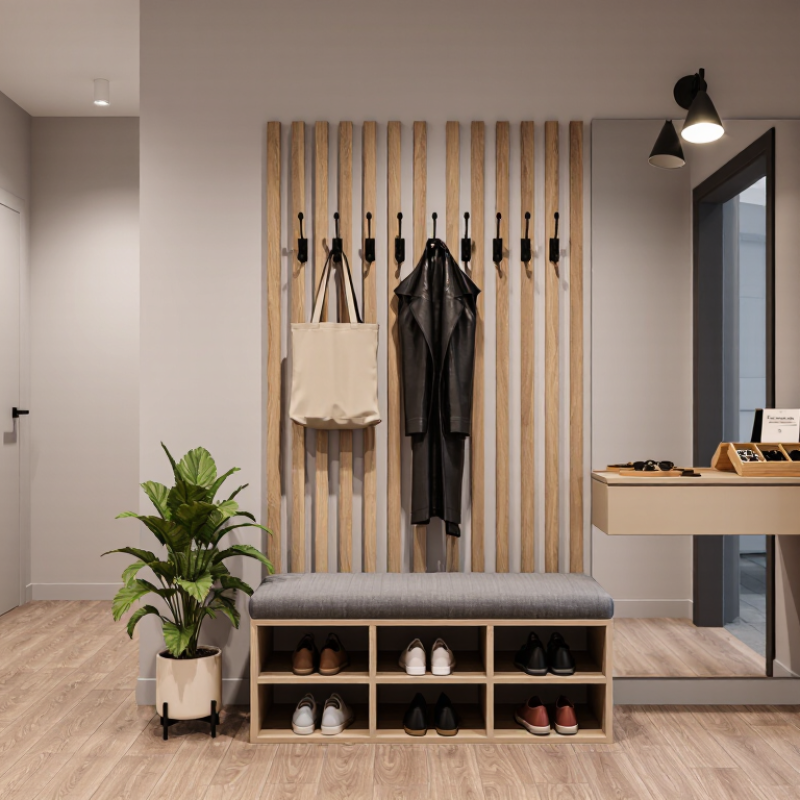
An entryway storage system keeps shoes, coats, bags, and small daily items close to the door. Its design should match the space and the household’s routine. A shoe cabinet hides clutter and protects footwear from dust. Choose adjustable shelves if boots and trainers vary in height. A bench combines seating with storage, making it easier to change shoes. But a deep bench can obstruct a narrow walkway. Measure the door swing and walking path before selecting one.
Wall-mounted hooks and shelves use vertical space and keep damp coats away from the floor. Open racks allow shoes to air out, while closed cabinets create a cleaner appearance. Modular systems combine cabinets, hooks, drawers, and seating in different layouts. They can suit changing needs, though too many separate parts may feel crowded. Keep it practical. For custom units, confirm dimensions, board thickness, edge finishing, hardware, and ventilation details with the manufacturer. Small gaps matter. A cabinet that fits on paper may still be awkward beside a radiator or light switch, so check the actual entryway before ordering.
China’s entryway storage industry is organized around specialized suppliers, integrated factories, and export-focused manufacturers. Some plants cut and coat steel tubes for shoe racks and slim benches. Others shape engineered wood into cabinets, shelves, and hallway consoles. Hardware suppliers provide hinges, hooks, drawer slides, and adjustable feet. Details matter. A small mismatch in hole spacing can slow final assembly.
Integrated manufacturers coordinate several steps under one roof, from material cutting to packing. Smaller workshops often focus on a narrower product range or a particular process. This division can offer flexibility, but it also means a finished unit may depend on several suppliers. The structure is efficient, though not always as tidy as a catalog suggests. A delayed batch of metal hooks, for example, can hold up an otherwise complete order.
Export-oriented factories commonly support custom dimensions, flat-pack packaging, and production inspections. Buyers can assess capability by reviewing material specifications, sample consistency, packaging tests, and documented quality checks. A sample is useful, but it cannot reveal every issue in repeated production. That limitation deserves attention. Clear drawings and agreed tolerances help reduce avoidable rework, especially where wood panels, metal frames, and fittings must align precisely.
When comparing China’s entryway storage system manufacturers, look beyond product photos. Check whether the supplier can provide dimensioned drawings, material specifications, and clear options for changing shelf spacing or cabinet depth. A hallway may be only 90 centimeters wide, so a few extra centimeters can affect daily movement. Ask how panels handle moisture from damp shoes and umbrellas, and inspect edge sealing, hinges, drawer slides, and wall-fixing hardware. Small details matter.
Request a sample or production photos showing joints, finishes, and the back of the unit, not just the front. Confirm how load capacity is tested and whether the stated figure applies to each shelf or the whole cabinet. A polished sample can still hide uneven color across a full order. That is worth checking. Compare quality-control steps, packaging protection, production lead times, and how the manufacturer reports defects or delays. Ask for relevant test documents and verify that they match the exact materials and configuration being quoted; paperwork alone is not proof of consistent output. Some suppliers may not share every factory record, so note what remains unverified. A simple comparison sheet can keep price, customization, delivery, and evidence side by side.
Criteria for Comparing Manufacturers
Suggested evaluation weights for comparing manufacturers, rather than audited market statistics. Consider product durability, customization, production capacity, quality certifications, lead time, and export support when assessing suppliers.
China’s entryway storage market includes manufacturers with very different strengths. These ten profiles describe useful supplier types, not a verified ranking. Some factories focus on modular metal-and-wood systems, pairing slim steel frames with oak-look shelves. Others specialize in solid-wood benches, where joinery and finish consistency deserve close inspection. Compact-home producers design narrow shoe cabinets, wall hooks, and lift-up seats for tight hallways. Ventilated cabinet makers use slatted doors or rear gaps to help shoes dry. Practical details matter.
Several manufacturers build flat-pack units for efficient shipping, while custom-order workshops adjust widths, colors, and internal shelves. Commercial suppliers make durable locker-style storage for hotels and shared buildings. Moisture-resistant producers select coated panels and sealed edges for humid entryways. Export-focused factories may offer clear assembly guides and sample checks; buyers should still confirm hardware quality. A polished catalog can hide weak hinges. Not always. Design-led makers often combine mirrors, concealed hooks, and shallow drawers, but attractive layouts need real storage capacity. Comparing material samples, load limits, edge finishing, and packaging gives buyers a more dependable view of each manufacturer’s actual strengths.
Company-specific rankings and profile details cannot be verified from the information provided. To avoid presenting invented facts, the anonymous profile fields below are marked for source-based verification.
| Profile | Entryway Storage Product Range | Materials and Finishes | Customization Options | Manufacturing Capacity | Export Markets | Verification Status |
|---|---|---|---|---|---|---|
| Profile 01 | Not verified | Not verified | Not verified | Not verified | Not verified | Company source required |
| Profile 02 | Not verified | Not verified | Not verified | Not verified | Not verified | Company source required |
| Profile 03 | Not verified | Not verified | Not verified | Not verified | Not verified | Company source required |
| Profile 04 | Not verified | Not verified | Not verified | Not verified | Not verified | Company source required |
| Profile 05 | Not verified | Not verified | Not verified | Not verified | Not verified | Company source required |
| Profile 06 | Not verified | Not verified | Not verified | Not verified | Not verified | Company source required |
| Profile 07 | Not verified | Not verified | Not verified | Not verified | Not verified | Company source required |
| Profile 08 | Not verified | Not verified | Not verified | Not verified | Not verified | Company source required |
| Profile 09 | Not verified | Not verified | Not verified | Not verified | Not verified | Company source required |
| Profile 10 | Not verified | Not verified | Not verified | Not verified | Not verified | Company source required |
A useful manufacturer comparison starts with evidence, not a polished catalogue. Ask for factory details, production steps, and recent quality records. Check whether the company builds key components in-house or relies on outside suppliers. This affects lead times and consistency. Details matter.
Assess each product against a real entryway. Measure the available wall width, floor space, and door clearance. Review load ratings, fixing methods, edge finishing, and resistance to scratches or moisture. Request a sample or inspect a finished unit. Open drawers, test hooks, and check whether a bench feels stable under repeated use. A neat sample can still hide weak fittings, so inspect more than the visible surfaces.
Supply capability deserves equal attention. Ask about minimum order quantities, sample timing, monthly capacity, packaging options, and how delays are reported. Request a production schedule with inspection points, not just a delivery estimate. If possible, compare packaging samples for corner protection and clear assembly instructions. Ask for evidence. I would not treat one successful sample as proof of reliable mass production; that assumption is easy to make, and sometimes wrong. Leave room for a pilot order, then review defects, communication, and delivery accuracy before committing to larger volumes.