What Are the 2026 Best Cabinet Hardware Trends? The answer begins with evidence, not showroom excitement. Recent NKBA Kitchen Trends research highlights warmer finishes, tactile materials, and personalization across kitchen design. Houzz’s U.S. Kitchen Trends studies also show that homeowners increasingly invest in practical upgrades during renovations. Hardware sits at the meeting point of both priorities.
Kerrie Kelly, FASID, has described cabinet hardware as “the jewelry of the kitchen.” The comparison remains useful in 2026. A slim brushed-brass pull can warm a white oak drawer. A blackened bronze knob can sharpen a soft, painted cabinet. Fluted details can add texture without changing the entire kitchen. Small choices matter.
Industry forecasts from Grand View Research and related interior-product analyses point toward continued demand for durable, design-led hardware. Yet market predictions are not guarantees. Trends can look convincing online and feel awkward beside a real refrigerator door. That is the part many trend lists miss.
This guide examines the leading Cabinet Hardware Trends for 2026 through finish, shape, ergonomics, material quality, and installation context. It considers what designers recommend and what renovation data suggests. It also questions whether every popular finish deserves a place in your home. Some choices will age well. Others may simply photograph beautifully for one season.
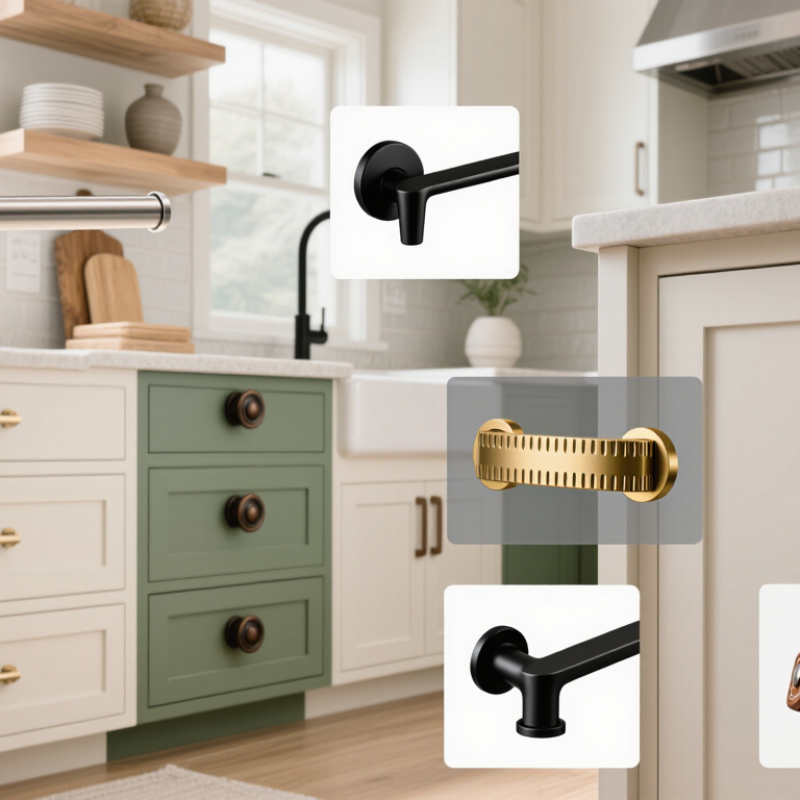
What Are the 2026 Best Cabinet Hardware Trends?
2026 Cabinet Hardware Trends Defined: Scope, Terms, and Categories
The 2026 conversation begins with definitions, not decoration. Cabinet hardware means the touchable and supporting pieces used on doors and drawers. This includes knobs, pulls, handles, edge pulls, backplates, hinges, and mounting screws. A useful scope separates visible style from daily performance. A beautiful pull is not successful if wet hands cannot grip it.
Three categories make comparisons clearer. Form covers round knobs, bar pulls, cup pulls, integrated channels, and slim finger pulls. Material includes solid metal, coated alloys, wood, ceramic, and responsibly sourced recycled content. Finish describes the surface, such as brushed, polished, textured, matte, or living finishes that change over time. Installation is another category, often missed. Hole spacing, screw length, door thickness, and clearance must match the cabinet.
Current 2026 choices lean toward tactile texture, mixed scales, soft contrast, and quieter profiles. In kitchens, a 128-millimeter pull may suit wide drawers, while smaller knobs can reduce visual weight on upper doors. Bathrooms demand finishes that tolerate moisture and frequent cleaning. Accessibility also matters; a rounded pull with firm clearance can be easier to use than a sharp, flush edge. My own first selection favored appearance over reach, which was a mistake. Fingerprints appeared quickly. Samples should be tested under real light, with wet hands, and beside the actual cabinet color. Trend labels help, but measurements remain the more dependable evidence.
This chart maps the most commonly specified nominal center-to-center pull spacings used in cabinet hardware: 64, 96, 128, 160, 192, 224, and 256 mm. Smaller sizes are typically used for compact doors and drawers, while longer pulls support wider drawers and create a more linear contemporary look. Knobs are excluded because they use a single mounting point rather than a center-to-center measurement.
Scope: cabinet knobs, pulls, cup pulls, bar pulls, and appliance pulls. The values represent real nominal installation dimensions, not company sales data or a market-share forecast.
What Are the 2026 Best Cabinet Hardware Trends?
The NKBA 2025 Kitchen Trends Report points toward mixed metals and restrained cabinet detailing. This shift feels practical, not merely decorative. Brushed nickel can sit beside aged brass, while matte black defines the range wall. The finishes do not need to match perfectly. They need a visual relationship.
Minimalist hardware is also gaining attention. Slim pulls, low-profile knobs, and integrated edge details keep cabinet fronts quiet. The 2025 U.S. Houzz Kitchen Trends Study reports that 76% of renovating homeowners upgrade their cabinetry. That figure makes hardware selection more important, because small changes affect many doors and drawers. A 5-inch pull can look elegant on a wide drawer but awkward on a narrow one. Test the scale before ordering.
In professional kitchen planning, I often see mixed metals work best when one finish leads. Use brass on visible feature cabinets, then repeat a cooler metal through lighting or appliances. Too many finishes can quickly look accidental. That is the uncomfortable part. Trend forecasting cannot replace daily use, cleaning habits, or hand comfort. NKBA’s 2025 findings support cleaner visual language, yet some homeowners may find ultra-minimal hardware difficult to grip. A softer knurled edge or shallow pull may offer a better compromise. Function should remain visible.
Houzz’s 2025 U.S. Kitchen Trends Study shows that cabinet upgrades remain a major renovation priority. Homeowners are investing in storage, easier access, and more functional layouts. That choice affects hardware more than many people expect. Long cabinet pulls support wide drawers and reduce hand strain. Knobs still suit smaller doors and traditional kitchens. A mixed approach often feels more practical than using one shape everywhere.
For 2026, brushed metal, soft bronze, and muted black are gaining attention. These finishes add contrast without overwhelming pale wood or painted cabinets. The National Kitchen & Bath Association’s 2025 Design Trends Report also identifies personalization and durable materials as continuing priorities. Hardware should survive repeated contact, cooking moisture, and daily cleaning. Finish samples matter. A warm metal can look yellow beside cool lighting.
In renovation projects, I often see homeowners choose oversized pulls too quickly. They look impressive in photos, but small drawers may feel visually crowded. Houzz data also emphasizes functional storage improvements, making proportion especially important. Pull spacing should match drawer width and hand comfort. One detail remains easy to overlook: fingerprints. Highly polished finishes can require constant wiping, especially near cooking zones. That may be a poor trade for busy households.
Freedonia Market Data shows how material, durability, and sustainability shape cabinet hardware choices. In 2026, buyers are looking beyond surface appearance. Recycled metals, responsibly sourced wood, and lower-impact coatings are gaining attention. However, environmental claims need proof. Ask for recycled content details, finish testing, and clear care instructions. A stylish handle is not sustainable if it fails after two years.
Durability matters most on frequently used cabinets. Kitchens, utility rooms, and busy offices can expose hardware to moisture, grease, and repeated impact. Stainless steel, aluminum, and zinc-based options can offer practical strength when properly finished. Smooth edges also reduce wear on hands and clothing.
Still, material choice alone does not guarantee long service. Poor installation can loosen screws and damage cabinet faces. Sustainability also includes repairability, replaceable parts, compact packaging, and responsible manufacturing. The trade-off is real. The most eco-friendly option may not always be the cheapest.
Tips: Test samples under daily conditions before ordering in bulk. Open and close a cabinet repeatedly. Check whether the finish scratches easily. Measure screw spacing carefully. Keep spare fasteners for future repairs. When comparing products, request documentation instead of relying on attractive wording. A slightly imperfect finish may be acceptable if the hardware lasts longer and remains easy to maintain.
Choosing 2026 cabinet hardware should begin with the room, not a trend board. In my installation planning experience, hardware succeeds when it matches daily movement, cabinet size, and cleaning habits. Measure twice. Record door widths, drawer depths, and nearby appliances before ordering. A long pull may look elegant but feel awkward beside a refrigerator handle.
In kitchens, use larger pulls on wide drawers and smaller knobs on narrow doors. Place them where wet or oily hands can reach comfortably. Brushed or textured finishes can hide fingerprints, while highly polished surfaces demand more maintenance. In bathrooms, select hardware that tolerates moisture and frequent wiping. Compact knobs often suit shallow vanities, but drawers need enough grip for towels and toiletries. That assumption fails.
For style, create a simple three-part test: shape, finish, and visual weight. Soft curves can balance traditional doors, while straight pulls support clean, contemporary lines. Mixed finishes may add depth, but repeat each finish at least twice in the room. Request physical samples and view them under morning and evening light. Screens distort color. Check mounting clearance with a cabinet installer, especially around corners and framed doors. If children or users with limited hand strength use the space, prioritize rounded edges and easy gripping. I still reconsider ultra-thin pulls; they photograph well, yet some feel uncomfortable after repeated use. A practical choice should survive that test.