What is Dry Type Transformer Benefits and Applications?
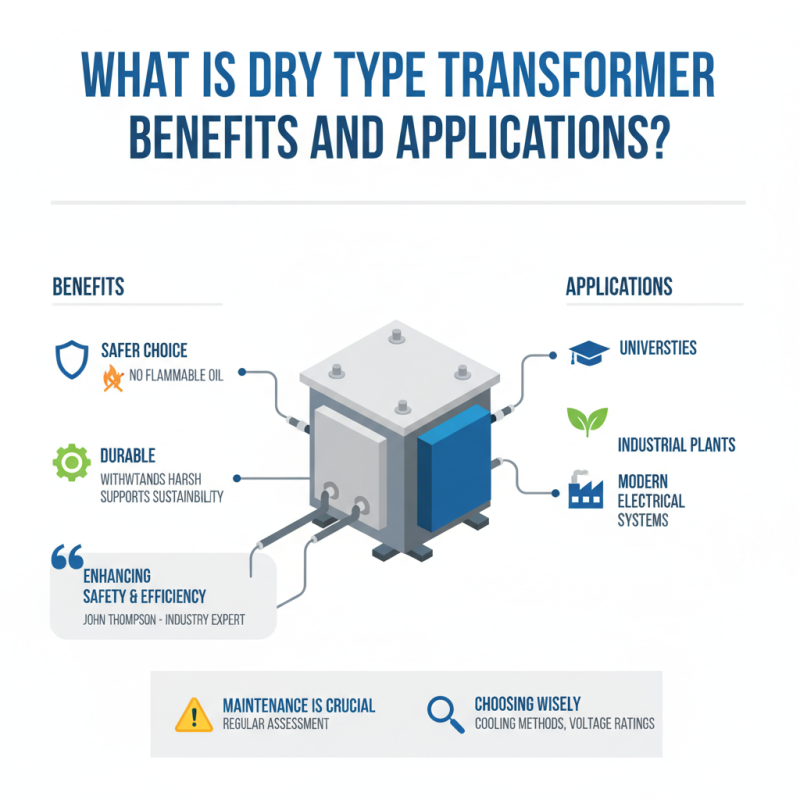
Dry-Type Transformers play a crucial role in modern electrical systems. These units operate without flammable oil, making them a safer choice for various applications. As industry expert John Thompson states, "Dry-type transformers are essential for enhancing safety and efficiency."
Their design allows them to withstand harsh environments. Facilities like universities and industrial plants often rely on these transformers. The demand for energy-efficient solutions grows as the world focuses on sustainability. However, some users may overlook maintenance needs, which can lead to performance issues.
Choosing the right dry-type transformer can be challenging. Factors such as cooling methods and voltage ratings must be considered. While these transformers have numerous benefits, understanding their limitations is vital. Users should regularly assess their equipment for optimal function and safety.
Understanding Dry Type Transformers: An Overview
Dry type transformers are increasingly popular in various applications due to their unique characteristics. Unlike oil-filled transformers, dry type transformers use air or resin for insulation. This design makes them less susceptible to environmental hazards. They are ideal for indoor settings where safety is a concern.
One key advantage is their low-maintenance nature. Since they don’t have oil, the risks of leaks are minimal. This factor contributes significantly to their reliability and longevity. In industrial plants, they play a critical role, especially in voltage regulation and power distribution.
Tip: When selecting a dry type transformer, consider the specific load requirements. This attention to detail can prevent operational issues.
Another aspect to note is their efficiency, especially in energy-intensive operations. They often have lower losses compared to their liquid counterparts. Yet, they can be more costly upfront. Businesses should weigh these factors before making a choice.
Tip: Regular inspections are essential to ensure optimal performance. This practice can help spot small issues before they escalate.
What is Dry Type Transformer Benefits and Applications?
| Parameter | Description |
| Type | Air-cooled, insulated with resin |
| Cooling Method | Natural air convection |
| Applications | Commercial buildings, Industrial plants, Data centers |
| Advantages | Reduced fire risk, Lower maintenance, Environmental friendly |
| Efficiency | Higher than traditional oil-filled transformers |
| Lifespan | Typically 20-30 years |
| Installation Location | Indoor and outdoor with proper housing |
Key Benefits of Utilizing Dry Type Transformers
Dry type transformers are becoming increasingly popular in various industrial applications due to their numerous benefits. One significant advantage is their environmental safety. Unlike oil-filled transformers, dry type transformers use air or resin for insulation. This reduces the risk of environmental contamination from leaks. According to the American National Standards Institute, these transformers are easier to install and maintain, which positively impacts operational costs.
Another key benefit is their durability. Dry type transformers can withstand harsh environmental conditions. They are resistant to moisture, dust, and corrosion. A report by the International Electrotechnical Commission indicates that they have a longer lifespan compared to their liquid-filled counterparts. This longevity translates to lower replacement costs and less downtime for facilities relying heavily on consistent power supply.
Moreover, dry type transformers are more energy-efficient. Their design minimizes energy losses during operation. The U.S. Department of Energy highlights that improved energy efficiency can lead to substantial savings, especially in large-scale applications. Nonetheless, while they are advantageous, installation can be more complex. Building modifications may be needed for adequate ventilation. This aspect should be considered during project planning.
Common Applications of Dry Type Transformers in Various Industries
Dry type transformers play a crucial role in various industries by providing safe and efficient power distribution. In commercial buildings, they are commonly used for lighting and HVAC systems. Their ability to operate in confined spaces without the risk of oil leaks makes them ideal for urban environments. Unlike oil-filled transformers, dry type transformers have reduced environmental risks.
In industrial applications, these transformers are vital for process control. They are frequently utilized in manufacturing plants and data centers. The reliability of dry type transformers minimizes operational downtime, which is essential for productivity. They can be easily installed indoors, avoiding the complexities associated with outdoor setups.
Moreover, renewable energy systems benefit from dry type transformers. They support solar panels and wind turbines by converting generated power to usable voltage levels. This adaptability enhances their utility in modern energy solutions. Despite their advantages, challenges exist, such as higher initial costs compared to other types. Organizations must evaluate long-term benefits against upfront expenses for optimal decision-making.
Comparative Analysis: Dry Type vs. Oil-Immersed Transformers
When comparing dry type transformers and Oil-Immersed Transformers, several factors come into play. Dry type transformers use air as a cooling medium, while oil-immersed transformers rely on oil for cooling and insulation. This fundamental difference affects their applications and advantages.
Dry type transformers are generally safer. They are less flammable and can be installed indoors without fire risk. However, their cooling efficiency can be less than that of oil-immersed types, especially in high-load situations. Conversely, oil-immersed transformers are often preferred in outdoor settings where space and ventilation are adequate, due to their excellent cooling capabilities.
Tips: Consider the environment when choosing your transformer. If safety is a priority and space is limited, dry type may be a better fit. For larger industrial applications, you might find oil-immersed transformers more effective. Also, reflect on maintenance needs. Dry type transformers require less maintenance over time but might still need periodic inspections.
Ultimately, the decision between dry and oil-immersed transformers depends on application-specific needs. Evaluating your unique situation is crucial. Understanding the pros and cons allows for a more informed choice that aligns with safety and efficiency requirements.
Maintenance and Safety Considerations for Dry Type Transformers
Dry type transformers are known for their inherent safety and maintenance advantages. They use air as the cooling medium, which significantly reduces fire hazards compared to oil-filled transformers. According to the National Fire Protection Association (NFPA), dry type transformers are less likely to ignite due to electrical faults. This is crucial, especially in high-risk environments like industrial plants, where safety is non-negotiable.
Regular maintenance of dry type transformers is essential for optimal performance. The IEEE suggests that visual inspections should occur every six months. Dust accumulation can affect cooling efficiency and increase the risk of overheating. Over time, insulation materials may degrade. Testing insulation resistance annually helps identify potential issues before they escalate. However, some facilities neglect this critical step, often due to budget constraints. This can lead to costly downtime or equipment failure.
Moreover, training personnel on maintenance protocols is often overlooked. The U.S. Department of Energy emphasizes a well-informed workforce is vital to ensuring safety standards. A deeper understanding of transformer operations can prevent accidents. Unfortunately, without proper training, personnel may misinterpret performance anomalies, leading to inappropriate responses. Enhancing workers' knowledge can mitigate risks and foster a safer workplace environment.
Benefits of Dry Type Transformers
This bar chart illustrates the key benefits of dry type transformers, highlighting their advantages in various applications.